
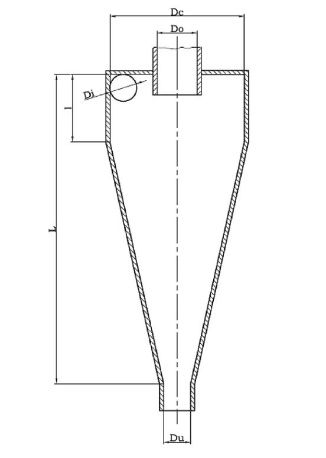
As simple the basic design of a cleaner or hydrocyclone is as complex is the flow within such an apparatus. Figure 1 shows a sketch of the basic design parameters of a hydrocyclones.
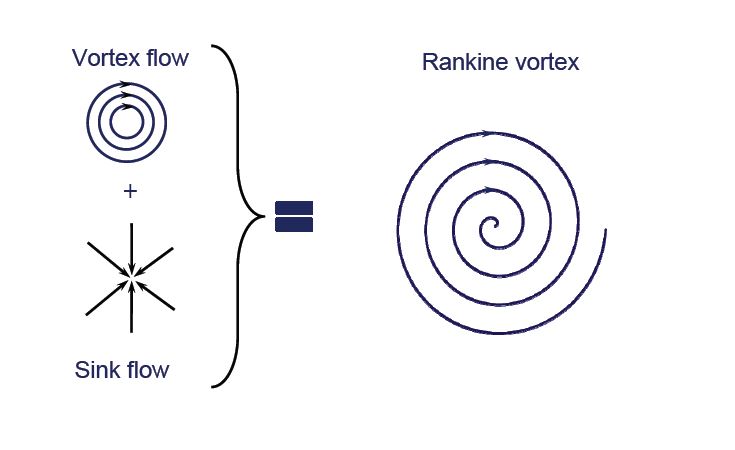
The fluid is pumped through the inlet and due to the geometry of the cleaner a rotating flow develops. In steady state equilibrium conditions this flow is the combination of a vortex flow and a sink flow, the so called “Rankine vortex” which is schematically drawn in Figure 2.
A high separation efficiency or cleanliness efficiency can be achieved in different ways:
- High pressure difference between the inlet and accepts: This results in a high tangential velocity and high centrifugal acceleration. Since the pressure loss directly affects cyclone pumping energy demand, it must be limited for cost reasons. In a given cyclone, the pressure loss will rise with increasing throughput, the retention time will be shorter, and the turbulence will be greater. A maximum cleanliness efficiency therefore exists at a certain throughput.
- Small cyclone diameter: This has practical limitations. For example, the inlet and outlet connections require dimensioning to prevent plugging for operational reliability. The minimum possible diameter therefore depends on the maximum particle size or trash length such as wires in each processing section. In addition, the low capacity of a small hydrocyclone demands many units in parallel. This sets cost limits on the minimum cyclone diameter.
- Low stock consistency: This limits freedom of particle motion the least. At higher stock consistencies, the fibre network becomes denser and increasingly restricts particle motion. This is therefore a matter of fibre content, since ash content has little effect on freedom of particle motion.
- Low flake content: In the same way as high stock consistency, flakes restrict particle motion. Since more flakes are removed in an heavy weight (HW) cleaner, fibre losses increase.
- High suspension temperature: This reduces the water viscosity and therefore reduces flow resistance to radial particle motion.
- Appropriate hydraulic loading of the hydrocyclone and appropriate split into accept and reject flows: The cyclone should operate within the hydraulic design limits regarding throughput and reject flow. A higher reject flow improves separation but increases fibre losses.
- Appropriate reject removal: This should be continuous as much as possible. With intermittent operation, flushing water flows should be as low as possible so they do not flush back the HW already separated. This again means higher fibre losses.
The following comments apply to particle properties:
- Particles with large density difference compared to water separate more efficiently whether they are light weight (LW) or heavy weight (HW).
- Particles whose density is very near 1 g/cm3 may separate as heavy or light particles depending on suspension temperature or not at all. For example, this applies to some hot melts (0.95 < ρ < 1.05 g/cm3) since the density of water decreases from 0.995 to 0.971 g/cm3 when its temperature rises from 30 to 80 °C.
- A larger particle at comparable density gives a larger difference for centrifugal and buoyancy forces (inward acting for LW and outward acting for HW) and a better separation effect. For example, HW cleaners hardly separate filler particles 3 µm in diameter, but they separate coating particles 30 µm in diameter very well.
- Particles of comparable density with favourable hydrodynamic shape separate more effectively, i.e., spherical particles separate better than flat ones.
Case
-
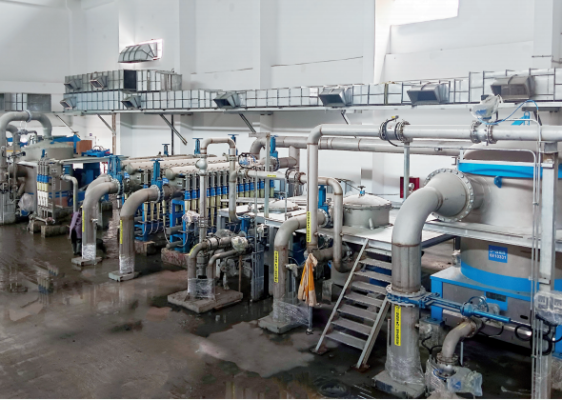 Yunda’s Complete Stock Preparation System for Jinlong’s 6600 mm Packaging Paper Project Enters Commissioning Stage
-
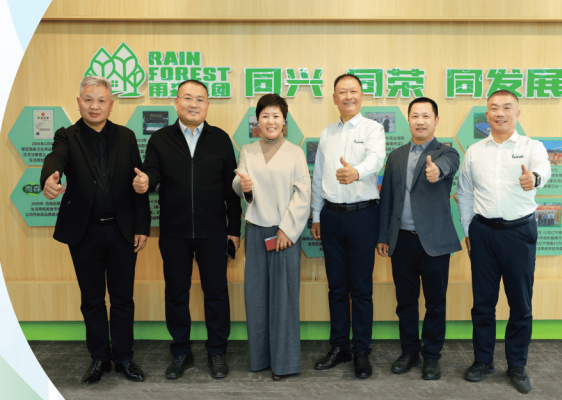 Yunda Secures Orders for Premium Tissue Paper Projects at Two Yusen Group Production Bases
-
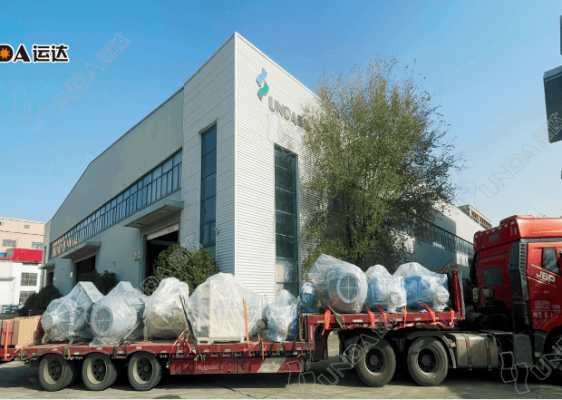 Yunda Successfully Ships the Complete Stock Preparation System for Hengan Group’s Tissue Paper Project
-
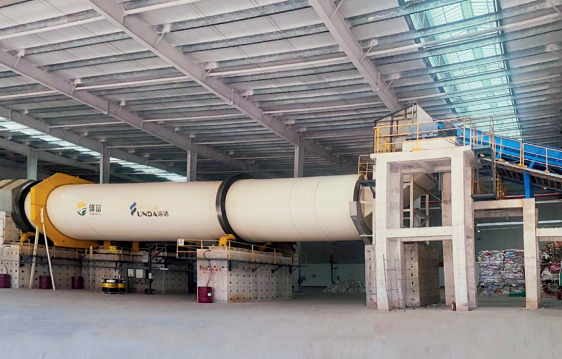 Yunda’s Complete Stock Preparation Systems for Guangxi Xiongfu Paper’s 300,000 t/a Grayboard Paper Project Successfully Start Up
-
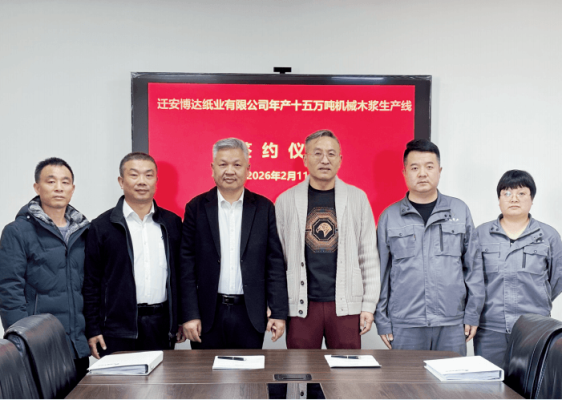 Yunda Wins the Full-Line Pulping Equipment Order for Qian’an Boda’s 150,000-Ton Bleached Chemi-Thermomechanical Pulp (BCTMP) Project
-
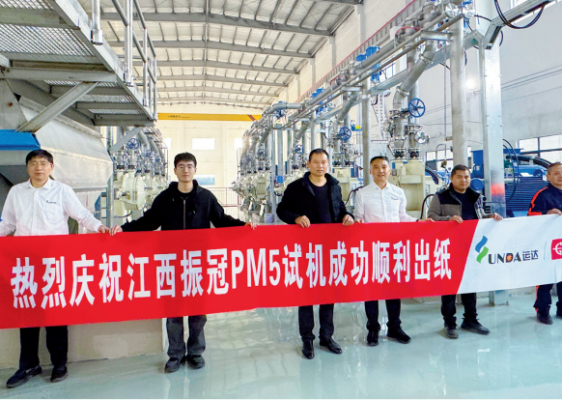 A Great Start! Yunda’s Complete Stock Preparation System Supports Successful First Paper Production on Jiangxi Zhenguan PM5
-
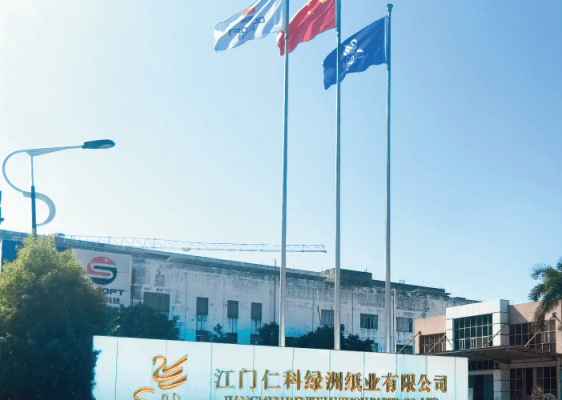 Yunda Successfully Starts Up Complete Stock Preparation and Approach Flow Systems for Jiangmen Renke Oasis 80,000 TPA Tissue Paper Project
-
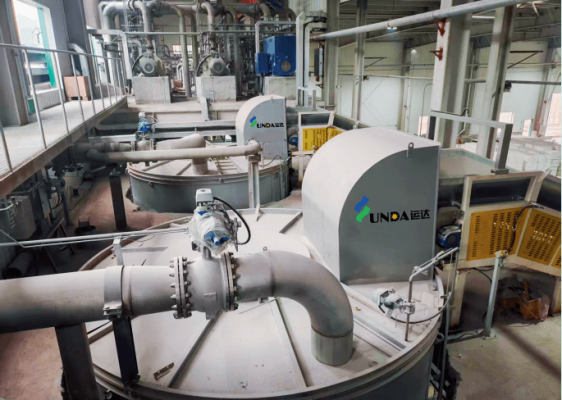 Successful Start-Up of Taisheng Group’s Tissue Paper Project in Guizhou
-
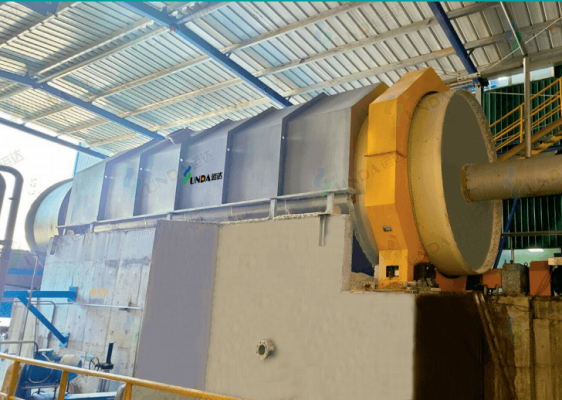 Taisheng Group’s Tissue Paper Project in Jiangxi Successfully Starts Production
-
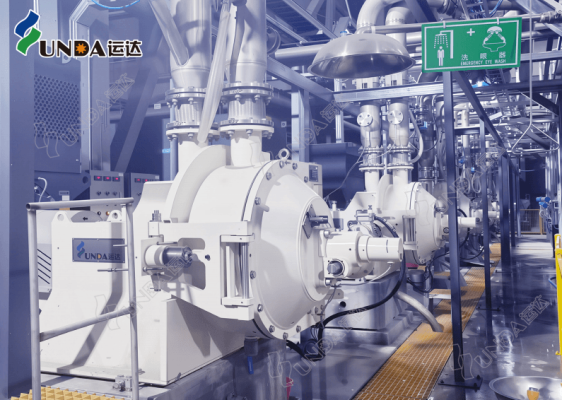 Sun Paper 300,000 TPA Tissue Project (Phase II) – Complete Pulping System Successfully Started Up