
A chip washer can remove a great deal of dirt from wood chips, but washing creates another problem: the chips leave the washer carrying a considerable amount of water.
That water should normally be removed before the chips move to the next stage of the pulping process.
This is where a wood chip dewatering screw comes in.
Installed after the chip washing stage, the dewatering screw continuously separates free water, fine wood particles and small impurities from the washed chips. The accepted chips are then conveyed upward by the rotating screw and discharged to the next process.
It is a simple function, but an important one. Stable chip dewatering helps a mill control the amount of water carried forward, reduce unwanted fines in the chip stream and provide more consistent material for downstream processing.
For mechanical, chemi-mechanical and other wood-chip-based pulping systems, the chip dewatering screw is therefore an important part of the wood preparation and chip washing line.
What Is a Wood Chip Dewatering Screw?
A wood chip dewatering screw, also called a chip dewatering screw or dewatering screw conveyor, is designed to remove excess washing water from wood chips after they have passed through a chip washing system.
The machine consists of an inclined screw conveying mechanism combined with a perforated screening section.
Washed chips enter through the feed inlet at the lower part of the machine.
As the screw rotates, the chips are gradually transported upward toward the discharge end.
During this movement, water passes through the perforated screen plate together with fine wood particles and other small contaminants that are able to pass through the screen openings.
The larger, acceptable wood chips remain inside the machine and continue moving upward until they reach the discharge.
A spray system continuously cleans the screen area to reduce blockage and maintain drainage performance.
The result is a continuous process combining three functions:
dewatering, removal of fines and conveying of washed wood chips.
Why Dewatering Is Necessary After Chip Washing
Wood chips used for pulp production can carry many unwanted materials before they enter the main pulping process.
Depending on the raw material and storage conditions, the chip stream may contain soil, sand, bark fragments, stones, metal and fine wood particles.
The chip washer performs the main cleaning function.
After washing, however, the wood chips contain a large amount of free water.
Sending this water directly into the next processing stage is usually undesirable.
The dewatering screw provides a transition between wet chip washing and subsequent chip processing.
A practical way to understand the process is:
Wood Chips → Chip Washing → Dewatering Screw → Next Pulping Process
The exact equipment downstream depends on the pulp production process.
For example, washed and dewatered chips may subsequently enter chip storage, pre-steaming, impregnation, refining or other process equipment.
The dewatering screw therefore does not replace the chip washer. It completes the washing stage by separating water and fine material from the cleaned chips before they continue through the production line.

How Does a Chip Dewatering Screw Work?
The operating principle is straightforward, which is one reason this type of equipment is well suited to continuous pulp mill operation.
1. Washed Wood Chips Enter the Dewatering Screw
After leaving the chip washer, the mixture of wood chips and washing water is fed into the inlet section of the dewatering screw.
At this stage, the chip concentration can still be relatively low.
For the equipment configurations shown in the supplied technical information, the reference feed consistency is approximately 4–5%.
2. Water Drains Through the Perforated Screen
The lower section of the machine is fitted with a perforated screen plate.
As the chip-and-water mixture enters the machine, free water drains through these openings.
Fine wood particles and sufficiently small impurities can also leave the chip stream together with the drainage water.
The screen therefore performs more than simple water removal. It also provides a degree of separation between acceptable chips and smaller unwanted material.
3. The Screw Conveys the Chips Upward
A rotating screw continuously moves the accepted wood chips toward the higher discharge end.
The inclined arrangement allows drainage to continue while the chips are being transported.
As the chips travel along the machine, more free water is removed.
By the time they reach the discharge, the chip concentration has increased significantly.
According to the supplied equipment data, the reference discharge consistency is approximately 18–38%, depending on operating conditions and equipment configuration.
4. Fine Material Leaves with the Drainage Water
Water, fine wood particles and other small contaminants passing through the screen are collected separately.
This drainage stream can then enter the mill's water circulation or further treatment system according to the overall process design.
5. Spray Water Keeps the Screen Clean
One detail that should not be overlooked is the screen cleaning system.
Fine wood particles can gradually cover or block perforations in a screen plate. Once the open area decreases, drainage efficiency also falls.
For this reason, the dewatering screw shown in the supplied product information is equipped with a continuous spray backwashing system for the screen area.
Keeping the screen openings clean helps maintain stable drainage during continuous operation.
Wood Chip Dewatering Screw vs. Screw Press: They Are Not the Same Machine
This distinction is important, particularly when searching for equipment online.
The terms dewatering screw and screw press are sometimes used loosely, but they may describe very different machines.
A pulp screw press normally removes water from a fibrous pulp suspension by progressively compressing the material against a perforated screen.
Its purpose is usually to achieve relatively high pulp consistency through mechanical compression.
A wood chip dewatering screw, by contrast, is primarily intended to drain washed wood chips while conveying them from the chip washer to the next process.
The material being handled is different, and the mechanical objective is different.
| Equipment | Main Material | Main Function |
|---|---|---|
| Chip Washer | Raw wood chips | Wash chips and separate contaminants |
| Wood Chip Dewatering Screw | Washed wood chips | Remove free water and fines while conveying chips |
| Pulp Screw Press | Fiber suspension / pulp | Increase pulp consistency through mechanical pressing |
This distinction is especially important when specifying equipment for a pulp project.
A customer looking for a chip dewatering screw after a chip washer normally does not need the same machine as a customer looking for a screw press for pulp thickening.
Main Components of a Wood Chip Dewatering Screw
Although the design may vary according to capacity and project requirements, a typical chip dewatering screw includes several basic assemblies.
The feed section receives washed chips and water from the upstream chip washing system.
The screw shaft and flights move the chips continuously toward the discharge.
The perforated screen plate allows water, fines and small particles to leave the accepted chip stream.
The trough or housing contains the material and supports the screening area.
The drive system, consisting of motor and transmission components, provides the torque required to move the chips.
The spray or backwashing system cleans the screen surface during operation.
Finally, the discharge section delivers the dewatered chips to the next conveyor, bin or process machine.
For mill operation, good access to the screen, screw, drive and spray system is just as important as nominal capacity because these are the areas operators need to inspect during routine maintenance.
Technical Parameters of the Wood Chip Dewatering Screw
The supplied technical data includes six reference configurations covering capacities from 300 to 1,800 t/d.
| Model | TSLX706-1 | TSLX706-2 | TSLX706-3 | TSLX808-1 | TSLX808-2 | TSLX808-3 |
| Feed Consistency (%) | 4–5 | 4–5 | 4–5 | 4–5 | 4–5 | 4–5 |
| Discharge Consistency (%) | 18–38 | 18–38 | 18–38 | 18–38 | 18–38 | 18–38 |
| Capacity (t/d) | 300–450 | 500–750 | 800–1200 | 400–600 | 800–1200 | 1200–1800 |
| Motor Power (kW) | 15 | 2 × 15 | 3 × 15 | 37 | 2 × 37 | 3 × 37 |
These figures should be considered reference operating parameters rather than universal performance guarantees.
Actual dewatering performance can be influenced by wood species, chip size distribution, fines content, washing water volume, screen condition, feed uniformity and downstream process requirements.
That is why model selection should be based on the complete chip preparation system rather than daily production capacity alone.
Capacity Range: From 300 to 1,800 t/d
One useful feature of this series is the broad capacity range.
For smaller pulp lines, the TSLX706-1 provides a reference processing capacity of approximately 300–450 t/d with a 15 kW drive.
As production requirements increase, the TSLX706 series extends to:
500–750 t/d with 2 × 15 kW
and
800–1,200 t/d with 3 × 15 kW.
The larger TSLX808 configurations cover approximately:
400–600 t/d with 37 kW
800–1,200 t/d with 2 × 37 kW
and
1,200–1,800 t/d with 3 × 37 kW.
This gives engineers several configuration options when matching the dewatering section to the capacity of the chip washing line.
However, two projects with the same nominal tonnage do not necessarily require exactly the same configuration.
Raw material conditions matter.
A line processing uniform, well-screened chips can behave differently from one handling a large amount of fines, bark fragments or irregular chips.
What Does the Dewatering Screw Remove?
The machine is mainly designed to separate material according to whether it can pass through the perforated screening area.
The accepted wood chips remain inside the screw and are conveyed to the discharge.
The drainage stream can contain:
water from chip washing, fine wood particles, small wood fragments and other sufficiently small impurities.
This is an important distinction.
The dewatering screw should not be expected to remove every contaminant found in raw wood chips.
Heavy contaminants such as stones, sand and metal are primarily dealt with during the upstream chip cleaning and washing process.
The dewatering screw then removes the water carried forward from that washing process while providing additional separation of fine material.
In other words, the two machines work together.
The chip washer cleans the chips.
The dewatering screw drains and transports the washed chips.
Why Removing Fine Wood Particles Matters
Fine wood particles are not always desirable in the same proportion as properly sized chips.
A high fines content can affect downstream material flow and create additional load in later stages of the process.
The perforated screen section of the dewatering screw allows some of these small particles to leave together with the wash water.
This helps produce a more uniform chip stream.
The objective is not to classify every chip by exact size. Dedicated screening equipment performs that job more precisely.
Instead, the dewatering screw provides a practical secondary separation during drainage.
This combination of water removal and fines removal is one of the reasons the equipment fits naturally after a chip washer.
Importance of the Screen Plate
The perforated screen is one of the key working components of a dewatering screw.
Its open area determines where water can escape.
During operation, however, wood fines can accumulate around the holes.
If the screen becomes partially blocked, several things may happen.
Drainage decreases.
More water remains with the chips.
The material load inside the machine changes.
And the discharge consistency may become less stable.
This explains why continuous screen cleaning matters.
The spray system installed on the dewatering screw directs water toward the screening area to remove accumulated fines and keep the holes open.
For mills operating continuously, this can reduce the need for frequent manual cleaning and help keep dewatering conditions more consistent.
Where Is a Dewatering Screw Used in a Pulp Mill?
Wood chip dewatering screws are mainly used in wood preparation and chip washing systems.
They are particularly relevant where chips are washed before subsequent pulping or fiber processing.
Typical applications can include mechanical pulp and chemi-mechanical pulp preparation systems, as well as other wood-chip-based processes that require cleaned and dewatered chips before the next stage.
Depending on the process, the downstream equipment may include:
pre-steaming equipment, chip bins, impregnation equipment, conveyors, refiners or other process machinery.
The exact arrangement should always follow the process design of the mill.
The important point is the position of the dewatering screw:
it normally sits between wet chip cleaning and downstream chip processing.
Benefits of Using a Chip Dewatering Screw
The value of this machine does not come from one dramatic action. It comes from doing several relatively simple jobs continuously and reliably.
First, it reduces the amount of free water carried forward with the chips.
Second, it removes a portion of fine particles together with the drainage water.
Third, the screw itself transports the material, so a separate transfer step may not be required at that location.
Fourth, the spray system helps maintain the screen's effective drainage area.
Finally, the machine can be sized for relatively large production lines. The supplied model range covers nominal capacities from approximately 300 t/d to 1,800 t/d.
For a pulp mill, the practical benefit is a more controlled transition from the washing section to the next stage of chip processing.
How to Select a Wood Chip Dewatering Screw
Selecting a dewatering screw only by looking at “tons per day” is risky.
Capacity is important, but it is only one part of the calculation.
The first question should be: What exactly is coming from the chip washer?
The quantity of water, chip size distribution and fines content determine how much drainage work the machine must perform.
The required outlet condition also matters.
For the reference models presented here, the feed consistency is approximately 4–5%, while the stated discharge range is 18–38%.
A project engineer should therefore consider the complete material balance rather than assuming that every installation will automatically reach the same outlet value.
Wood species also matters.
Hardwood and softwood chips can differ in density, geometry and drainage characteristics. Chip thickness and size distribution may also change the way material moves through the screw.
The amount of bark and fines should be reviewed as well.
A high fines load means the screen and cleaning system may face more demanding operating conditions.
Installation layout is another consideration.
The inlet elevation, discharge elevation, inclination, available footprint and connection with upstream and downstream equipment all need to be confirmed before finalizing the machine.
Finally, the electrical and automation requirements should match the overall mill control philosophy.
Information to Provide When Requesting a Dewatering Screw
For an accurate equipment selection, it is useful to provide the supplier with the actual process conditions rather than simply asking for “one dewatering screw.”
The most useful information includes the wood species and chip type, required production capacity, chip washer capacity, expected inlet consistency, required discharge consistency, approximate fines content, wash-water flow, upstream and downstream equipment, available installation space, operating hours and required automation level.
A process flow diagram is particularly helpful for a new pulp project.
With this information, the dewatering screw can be selected as part of the actual wood preparation process instead of as an isolated piece of machinery.
Operating Factors That Affect Dewatering Performance
Even a correctly sized dewatering screw needs stable operating conditions.
A fluctuating feed from the chip washer can cause the material level inside the screw to change continuously.
If too much water enters suddenly, the effective drainage area may become overloaded.
If the chip flow is too low, the machine may operate outside its intended loading range.
Screen cleanliness is another important factor.
Operators should regularly observe whether all sections of the perforated plate are draining normally.
A section with noticeably less drainage may indicate blocked holes or ineffective spray coverage.
Motor current can also provide useful information.
A sudden increase in drive load may indicate excessive chip accumulation, foreign material or a mechanical problem.
The discharge itself is worth watching.
Changes in chip wetness, fines content or flow pattern often give operators an early indication that something upstream or inside the dewatering screw has changed.
These simple observations can be more useful than waiting for a serious operating problem to develop.
Maintenance of a Wood Chip Dewatering Screw
A dewatering screw normally has a relatively straightforward maintenance routine, but the wet operating environment should not be underestimated.
The perforated screen should be inspected for clogging, wear and physical damage.
Spray nozzles should be checked to ensure that the complete screen area receives adequate cleaning water.
Screw flights are subject to wear because they continuously move wet wood chips and any remaining abrasive material.
Bearings, drive components and the gearbox should be inspected and lubricated according to the maintenance schedule.
Operators should also check the alignment and fastening of the screen and housing.
Any abnormal noise or vibration should be investigated early rather than treated as normal operation.
The drainage area should remain clear so that removed water and fines can leave the machine without backing up into the screening section.
In practice, good maintenance is mainly about keeping three things healthy:
the screw, the screen and the spray system.
If these three areas are working correctly, the machine is usually able to perform its basic job consistently.
Dewatering Screw and Chip Washing System Design
The dewatering screw should not be selected independently from the chip washing system.
Its capacity must be coordinated with the upstream washer.
The water flow entering the machine must match the available drainage area.
The discharge must also be suitable for the capacity and feed requirements of the downstream equipment.
A well-balanced system avoids creating a bottleneck.
For example, installing a large chip washer with an undersized dewatering screw can result in unstable chip accumulation after washing.
On the other hand, simply installing an oversized machine does not automatically improve process performance.
The better approach is to consider the complete flow:
chip supply → washing → contaminant removal → dewatering → downstream processing.
This process-based selection is especially important for new mechanical or chemi-mechanical pulp projects where wood preparation equipment operates as an integrated system.
Wood Chip Dewatering Screw FAQ
What is a wood chip dewatering screw?
A wood chip dewatering screw is a continuous machine used after chip washing to remove free water from washed wood chips. A rotating screw transports the chips along a perforated screen, allowing water, fines and small impurities to drain away.
Where is the dewatering screw installed?
It is normally installed downstream of the chip washer and upstream of the next chip-processing stage.
The exact downstream process depends on the pulp mill configuration.
What is the feed consistency?
For the reference TSLX configurations described here, the feed consistency is approximately 4–5%.
Actual project conditions should be confirmed before equipment selection.
What discharge consistency can be achieved?
The supplied technical information lists a reference discharge consistency of approximately 18–38%.
Actual performance depends on the chips, feed conditions, water load, screen condition and equipment configuration.
What is the capacity of the dewatering screw?
The reference model range covers approximately 300–1,800 t/d, depending on configuration.
Does the dewatering screw remove sand and stones?
The dewatering screw is not intended to replace the chip washer or heavy-contaminant removal equipment.
Its main job is to remove water, wood fines and small particles after washing.
Heavy contaminants should primarily be separated upstream in the chip cleaning system.
Is a wood chip dewatering screw the same as a pulp screw press?
No.
A wood chip dewatering screw handles washed wood chips and relies mainly on drainage through a perforated screen while conveying the material.
A pulp screw press handles a fibrous pulp suspension and normally uses mechanical compression to achieve a much higher stock consistency.
Why is a spray system required?
Fine wood particles can block the openings of the perforated screen.
The spray system continuously cleans the screening area, helping maintain drainage performance during long-term operation.
What information is needed to select the right model?
The most important information includes production capacity, wood species, chip size, inlet consistency, required discharge consistency, fines content, chip washer capacity, water flow and installation layout.
For a new mill project, a process flow diagram is also recommended.
Wood Chip Dewatering Screw for Your Pulp Mill
A wood chip dewatering screw is not a complicated piece of equipment, but its position in the process makes it important.
The chip washer removes unwanted contamination from the raw material.
The dewatering screw then separates the wash water and fine particles while continuously conveying the accepted chips to the next stage.
When these two operations are properly matched, the result is a cleaner and more consistent wood-chip stream entering the pulping process.
Our available dewatering screw configurations cover reference capacities from 300 to 1,800 t/d, with feed consistency around 4–5% and reference discharge consistency of 18–38%.
For a new pulp line or the modernization of an existing chip washing system, the machine should be selected according to the complete process rather than capacity alone.
Send us your wood species, production capacity, chip washer parameters, inlet consistency, required outlet condition and process flow diagram.
Based on this information, we can recommend a suitable wood chip dewatering screw configuration for your pulp production line.
Case
-
 Yunda’s Complete Stock Preparation System for Jinlong’s 6600 mm Packaging Paper Project Enters Commissioning Stage
-
 Yunda Secures Orders for Premium Tissue Paper Projects at Two Yusen Group Production Bases
-
 Yunda Successfully Ships the Complete Stock Preparation System for Hengan Group’s Tissue Paper Project
-
 Yunda’s Complete Stock Preparation Systems for Guangxi Xiongfu Paper’s 300,000 t/a Grayboard Paper Project Successfully Start Up
-
 Yunda Wins the Full-Line Pulping Equipment Order for Qian’an Boda’s 150,000-Ton Bleached Chemi-Thermomechanical Pulp (BCTMP) Project
-
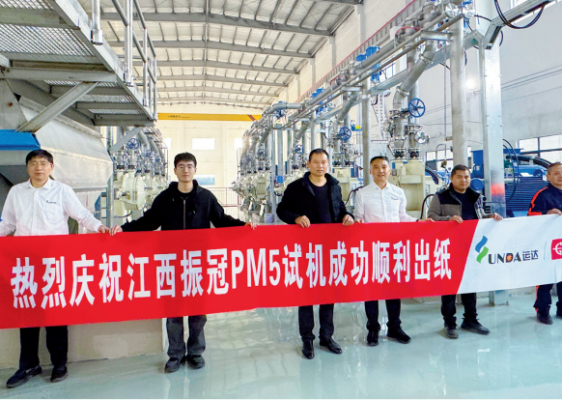 A Great Start! Yunda’s Complete Stock Preparation System Supports Successful First Paper Production on Jiangxi Zhenguan PM5
-
 Yunda Successfully Starts Up Complete Stock Preparation and Approach Flow Systems for Jiangmen Renke Oasis 80,000 TPA Tissue Paper Project
-
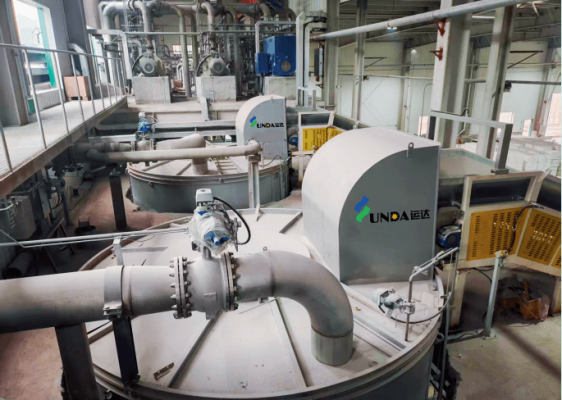 Successful Start-Up of Taisheng Group’s Tissue Paper Project in Guizhou
-
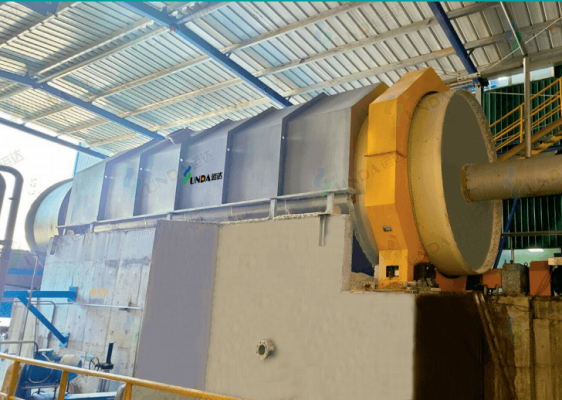 Taisheng Group’s Tissue Paper Project in Jiangxi Successfully Starts Production
-
 Sun Paper 300,000 TPA Tissue Project (Phase II) – Complete Pulping System Successfully Started Up