
In pulp and paper production, stable material feeding is essential for maintaining a reliable and continuous process. This becomes even more important when wood chips, fibers, or other raw materials need to enter a softening or treatment system operating at elevated temperature and pressure.
Under these conditions, the feeding system has to do more than simply move material from one point to another. It also needs to maintain a stable separation between the material feeding side and the pressurized process side.
The T-Pipe and Blowback Prevention Device is designed for this type of application.
During normal operation, material discharged from the feeder enters the softening pipe by gravity. At the inlet of the T-pipe, the material gradually forms a compact and stable material plug. This material plug helps prevent high-pressure steam from moving back toward the feeding side when the plug becomes loose or the material supply is interrupted.
This principle is particularly relevant to pulp and paper processes involving chip feeding, steaming, softening, thermomechanical treatment, and other continuous material handling applications. Plug-based feeding systems are widely used where solid or fibrous materials need to be introduced into pressurized equipment while limiting reverse steam flow.
Our T-Pipe and Blowback Prevention Device is available in several models, with stated throughput capacities ranging from 150 to 1,500 t/d, a design pressure of 1.0 MPa, and a design temperature of 190°C.
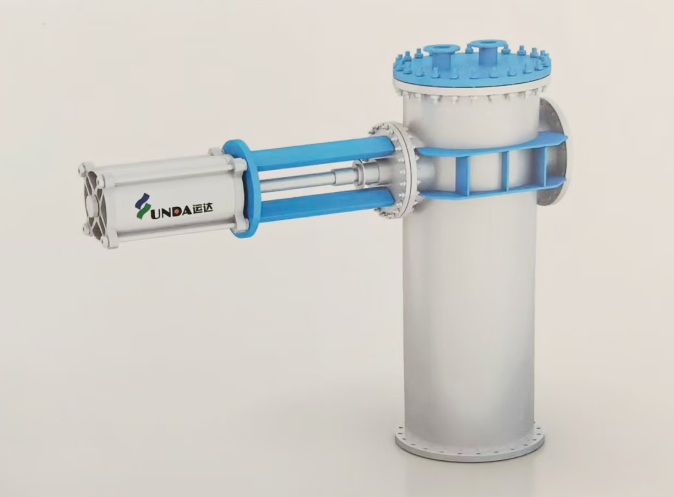
What Is a T-Pipe and Blowback Prevention Device?
A T-Pipe and Blowback Prevention Device is a process component installed between a material feeding system and a downstream softening or pressurized processing section.
Its main purpose is to help maintain a stable material plug and reduce the possibility of high-pressure steam moving backward through the feeding line.
The basic process is easy to understand.
Material is discharged from the feeder and enters the softening pipe. Because of the material flow and the geometry of the feeding system, the material accumulates at the T-pipe inlet and becomes compacted.
This compacted material forms a relatively dense plug.
The plug acts as a dynamic barrier between the upstream feeding system and the high-pressure section downstream.
Under normal operating conditions, material continues to move forward while the plug remains sufficiently dense to help resist reverse steam movement.
If the material feed becomes unstable, however, the plug may become loose or disappear. When this happens, the pressure difference between the downstream process and the feeding section can cause high-pressure steam to move backward.
This phenomenon is generally known as steam blowback or simply blowback.
Therefore, the T-pipe is not simply a conventional pipe fitting. It is part of a feeding and pressure-management arrangement designed around the physical behavior of the material.
Why Is Blowback Prevention Important?
Blowback can become a significant operating problem in systems where solid or fibrous material is introduced into a pressurized process.
A typical pulp or biomass feeding system may have a relatively low-pressure material feeding section connected to a downstream section containing steam at considerably higher pressure.
As long as a stable material plug is maintained, the plug helps separate these two areas.
If the plug loses its integrity, the pressure difference can drive steam in the reverse direction.
This may lead to:
- Unstable material feeding
- Steam moving toward the feeder
- Material being pushed backward
- Increased steam loss
- Production interruptions
- Additional stress on upstream equipment
- More difficult start-up and shutdown operations
Technical literature on continuous pulp processing describes the same basic principle: a plug screw feeder forms a fiber plug that must withstand pressure from the downstream process, while a loss of plug integrity can result in steam blowback.
This is why maintaining the material plug is an important part of the overall feeding system.
A well-designed T-pipe and blowback prevention arrangement can help operators maintain a more stable feeding process and reduce the likelihood of uncontrolled reverse steam flow.
How Does the T-Pipe Work?
The working principle of the T-Pipe and Blowback Prevention Device can be divided into several stages.
1. Material Discharge
The feeding equipment delivers material into the softening pipe.
Depending on the process, the material may consist of wood chips, fibrous raw materials, biomass, or other particulate materials.
2. Gravity Feeding
According to the supplied product information, material discharged from the feeder enters the softening pipe by gravity.
This means that the feeding arrangement and equipment layout are important for achieving a consistent material flow.
3. Material Plug Formation
As material reaches the T-pipe inlet, it accumulates and forms a stable, compact plug.
The density and stability of this plug are important because the plug helps separate the upstream feeding area from the high-pressure downstream environment.
4. Continuous Process Feeding
As new material enters the system, the material plug moves forward and the downstream process continues.
The objective is to maintain a relatively stable material flow rather than allowing the feeding section to become completely empty.
5. Blowback Prevention
If the material plug becomes loose or the material feed is interrupted, the pressure difference may cause high-pressure steam to move toward the feeding side.
The blowback prevention arrangement is designed to help control this situation and reduce the risk of reverse steam movement.
This type of pressure-sealing concept is already widely recognized in industrial fiber and biomass processing. Modern plug screw feeding systems are used to move raw materials into pressurized preheaters and other process equipment, while the material plug provides an important part of the pressure separation.
The Importance of Stable Material Plug Formation
The material plug is one of the most important elements in this type of feeding system.
Unlike a conventional liquid seal, the material plug is formed from the raw material itself.
Its effectiveness depends on several factors, including:
- Material bulk density
- Moisture content
- Particle size
- Fiber characteristics
- Material temperature
- Feeding rate
- Feeder speed
- Compression conditions
- Downstream pressure
For example, wood chips with different moisture levels may behave differently during feeding. Fine material, oversized chips, bark, sawdust, or other impurities can also affect flow characteristics.
This means that the T-pipe should always be considered together with the complete feeding system.
A T-pipe alone cannot compensate for an unstable or improperly sized feeder.
The upstream feeding equipment must deliver a sufficiently consistent material flow so that the T-pipe can perform its intended function.
In modern mechanical pulping and fiber processing systems, plug screw feeders are used to compress and transport chips toward pressurized processing equipment. Pre-steaming and material conditioning can also affect feeding performance and the subsequent refining process.
Applications in the Pulp and Paper Industry
The T-Pipe and Blowback Prevention Device is particularly relevant to pulp and paper applications where raw materials are handled under elevated temperature and pressure.
Wood Chip Processing
Wood chips are commonly heated or steamed before further processing.
Stable chip feeding is important because variations in the feed can affect downstream process conditions.
A T-pipe and blowback prevention arrangement can form part of the transition between the chip feeding system and the softening or steaming section.
Mechanical Pulping
Mechanical pulping uses heat, steam, and mechanical energy to separate wood fibers.
In thermomechanical pulping, for example, wood chips are steamed and subsequently fed to a pressurized refiner. Industrial process documentation describes the use of pre-steaming and plug screw feeding as part of this type of process.
In such systems, stable feeding is important because the refiner and upstream equipment need a consistent material supply.
CTMP and Thermomechanical Processes
Chemi-thermomechanical pulping and related processes may use a combination of heat, steam, mechanical treatment, and chemicals.
The raw material may need to be conditioned before it enters the next processing stage.
A stable material flow helps the process maintain consistent operating conditions.
Biomass Processing
The same basic feeding principle can also be relevant to biomass applications.
Bulky biomass is often more difficult to feed into pressurized equipment than conventional granular materials. The material needs to be compressed sufficiently to form a stable plug while maintaining acceptable energy consumption and equipment wear.
This makes plug formation and blowback prevention important considerations when designing biomass feeding systems.
T-Pipe for High-Temperature Applications
The supplied product specifications indicate a design temperature of 190°C.
At this temperature range, equipment design needs to take into account more than basic material transportation.
Temperature can influence:
- Material expansion
- Sealing performance
- Component strength
- Wear
- Thermal cycling
- Maintenance requirements
- Connection stability
For this reason, the T-pipe and associated components need to be selected according to the actual process conditions.
The stated design temperature of 190°C provides an important reference for equipment selection, but the actual operating temperature, pressure, material characteristics, and process configuration should always be confirmed before final equipment selection.
T-Pipe Design Pressure
The supplied product information specifies a design pressure of 1.0 MPa.
Pressure is one of the most important parameters in any blowback prevention application.
The higher the pressure difference between the downstream process and the upstream feeding section, the more important stable material plug formation becomes.
The actual pressure conditions should therefore be evaluated together with:
- Normal operating pressure
- Maximum process pressure
- Pressure fluctuations
- Start-up conditions
- Shutdown conditions
- Steam temperature
- Material feed rate
The T-pipe should be integrated into a system that is designed around these operating conditions.
Available Models
The product range includes four models:
| Model | Design Pressure | Design Temperature | Throughput |
|---|---|---|---|
| TXG720 | 1.0 MPa | 190°C | 150–250 t/d |
| TXG915 | 1.0 MPa | 190°C | 300–500 t/d |
| TXG1000 | 1.0 MPa | 190°C | 500–1,000 t/d |
| TXG1200 | 1.0 MPa | 190°C | 800–1,500 t/d |
These specifications are based on the product information shown in the supplied manufacturer documentation.
The available models cover different production capacities, allowing the equipment to be matched to different process scales.
However, throughput should not be the only factor considered when selecting a model.
The characteristics of the raw material, feeder configuration, operating temperature, process pressure, and downstream equipment should also be evaluated.
How to Choose the Right T-Pipe Model
Choosing the correct model starts with understanding the complete process rather than looking at the pipe size alone.
1. Determine Required Throughput
The first consideration is the expected material throughput.
For example, the TXG720 is specified for 150–250 t/d, while the TXG1200 is specified for 800–1,500 t/d.
The selected model should be appropriate for the required production capacity and the actual feeding conditions.
2. Check Process Pressure
The process pressure should be compared with the equipment design pressure.
The supplied models have a stated design pressure of 1.0 MPa.
3. Check Operating Temperature
The stated design temperature is 190°C.
If the system operates close to this temperature, thermal conditions and equipment materials should be carefully reviewed.
4. Understand the Raw Material
Different raw materials can have very different feeding characteristics.
The customer should provide information such as:
- Material type
- Moisture content
- Bulk density
- Particle size
- Fiber characteristics
- Feeding temperature
- Expected throughput
5. Review the Feeder
The T-pipe should be compatible with the upstream feeding equipment.
A screw feeder, plug feeder, or other feeding system needs to provide a stable material supply to maintain proper plug formation.
Relationship Between the T-Pipe and Screw Feeder
The T-pipe and screw feeder should be viewed as parts of one feeding system.
The feeder controls how material enters the process, while the T-pipe provides the transition into the downstream softening or pressurized section.
In many applications, the screw feeder also performs a compression function.
This is particularly important when the material needs to form a plug.
Industrial plug screw feeders are used to move raw materials into pressurized preheaters and digesters, and their compression characteristics are an important part of the feeding process.
If the feeder supplies material too slowly, the plug may become weak.
If the material characteristics change significantly, the plug may also become less stable.
Therefore, when troubleshooting blowback, operators should examine the complete system rather than focusing only on the T-pipe.
Maintenance and Inspection
Like other process equipment operating under high temperature and pressure, the T-pipe and associated blowback prevention components should be inspected regularly.
Recommended inspection points may include:
- Material buildup
- Internal wear
- Flange connections
- Sealing components
- Fasteners
- Moving components
- Abnormal vibration
- Steam leakage
- Changes in material flow
- Changes in operating temperature
- Changes in production capacity
Material buildup can influence the internal flow path and affect feeding performance.
Wear can also become an important consideration when handling abrasive raw materials.
For this reason, maintenance intervals should be determined according to actual operating conditions and the characteristics of the material being processed.
Common Causes of Blowback
When blowback occurs, several factors should be considered.
Insufficient Material Supply
If the feeder does not supply enough material, the material plug may become weak.
Unstable Feeding
Fluctuations in the material feed can affect plug formation.
Changes in Material Moisture
Moisture can influence bulk density and flow behavior.
Changes in Particle Size
Large chips, fines, bark, and other materials may behave differently inside the feeding system.
Improper Feeder Operation
Feeder speed and operating conditions should be matched to the required production rate.
Sudden Pressure Changes
Rapid changes in downstream pressure can affect the stability of the material plug.
Incorrect Start-Up or Shutdown Procedures
During start-up and shutdown, the material plug may not be in the same condition as during normal operation. Operators should therefore follow the recommended operating procedure for the complete system.
Benefits of a Properly Designed Blowback Prevention System
A properly designed T-pipe and blowback prevention arrangement can support several important process objectives.
Stable Material Feeding
A stable material plug helps maintain continuous material movement into the downstream process.
Reduced Steam Blowback
The compact material plug helps reduce the possibility of high-pressure steam moving back toward the feeding side.
Improved Process Stability
Consistent feeding can help downstream equipment operate under more stable process conditions.
Reduced Unnecessary Steam Loss
Maintaining an effective material seal can help reduce uncontrolled steam movement through the feeding system.
Better Equipment Integration
The T-pipe can be integrated with feeding, softening, steaming, and other process equipment as part of a complete material handling system.
The importance of pressure sealing is also recognized in other industrial fiber-processing systems, where plug feeders and counter-pressure arrangements are used to maintain separation between material and pressurized steam.
Why Choose a T-Pipe Designed for Industrial Feeding Systems?
A T-pipe used in a pressurized material feeding system has a different role from a standard pipeline tee.
Its design needs to consider the movement and compaction of solid material, the pressure difference between process sections, temperature, wear, and the interaction with upstream and downstream equipment.
For pulp and paper manufacturers, this means that the T-pipe should be selected as part of the process system rather than as an independent pipe component.
The right configuration can help the feeding system maintain a stable material plug and provide more reliable operation under demanding process conditions.
Frequently Asked Questions
What is a T-Pipe and Blowback Prevention Device?
It is a process component used in material feeding systems to help form and maintain a stable material plug and reduce reverse movement of high-pressure steam toward the feeding side.
What is blowback?
Blowback refers to the reverse movement of high-pressure steam or process gas toward the upstream feeding system when the material plug loses its sealing effect.
What is the purpose of the material plug?
The compact material plug acts as a dynamic barrier between the lower-pressure feeding section and the higher-pressure downstream process.
Where can this equipment be used?
It can be used in pulp and paper, wood processing, biomass treatment, steaming, softening, and other applications where solid or fibrous material needs to enter a higher-pressure process.
What is the design pressure?
According to the supplied product specification, the design pressure is 1.0 MPa.
What is the design temperature?
The supplied product specification gives a design temperature of 190°C.
What is the maximum listed throughput?
Among the models shown in the supplied specification, the TXG1200 has a listed throughput range of 800–1,500 t/d.
How do I select the right model?
Model selection should consider throughput, process pressure, temperature, material characteristics, feeder configuration, and the requirements of the downstream process.
Conclusion
The T-Pipe and Blowback Prevention Device is an important component for continuous material feeding systems where solid or fibrous materials enter a high-temperature or pressurized process.
Its operating principle is based on a simple but important concept: material discharged from the feeder enters the softening pipe and forms a stable, compact material plug at the T-pipe inlet. This plug helps separate the feeding section from the downstream pressurized environment and reduces the possibility of high-pressure steam moving backward through the system.
For pulp and paper applications, the stability of this material plug can have a direct influence on feeding performance and process continuity.
The product range includes TXG720, TXG915, TXG1000, and TXG1200, with stated throughput capacities from 150 to 1,500 t/d, a design pressure of 1.0 MPa, and a design temperature of 190°C.
However, selecting the right model should always be based on the complete process. Material properties, throughput, temperature, pressure, feeder performance, and downstream equipment all need to be considered.
For a new installation or equipment replacement project, providing detailed process information can help determine the appropriate model and configuration.
Looking for a T-Pipe and Blowback Prevention Device for a pulp, paper, biomass, or high-temperature material feeding system? Contact us with your material type, required throughput, operating pressure, operating temperature, and existing feeder information for a suitable equipment solution.
Case
-
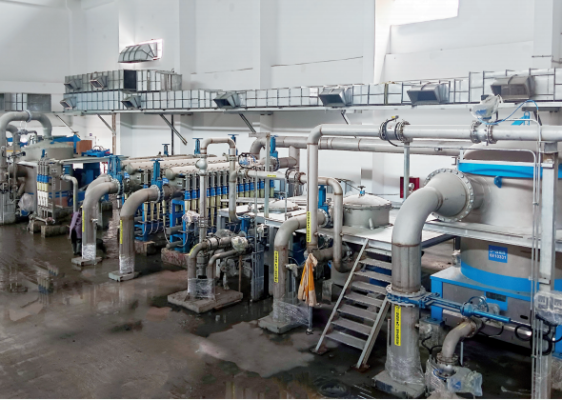 Yunda’s Complete Stock Preparation System for Jinlong’s 6600 mm Packaging Paper Project Enters Commissioning Stage
-
 Yunda Secures Orders for Premium Tissue Paper Projects at Two Yusen Group Production Bases
-
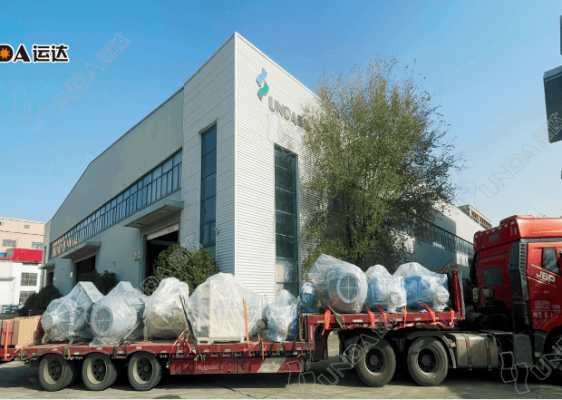 Yunda Successfully Ships the Complete Stock Preparation System for Hengan Group’s Tissue Paper Project
-
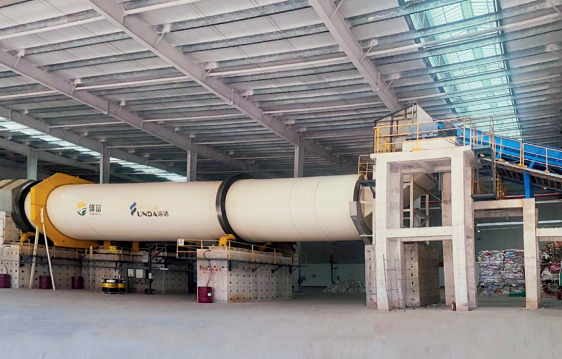 Yunda’s Complete Stock Preparation Systems for Guangxi Xiongfu Paper’s 300,000 t/a Grayboard Paper Project Successfully Start Up
-
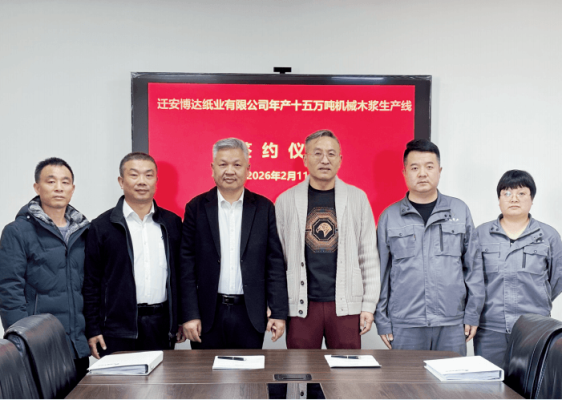 Yunda Wins the Full-Line Pulping Equipment Order for Qian’an Boda’s 150,000-Ton Bleached Chemi-Thermomechanical Pulp (BCTMP) Project
-
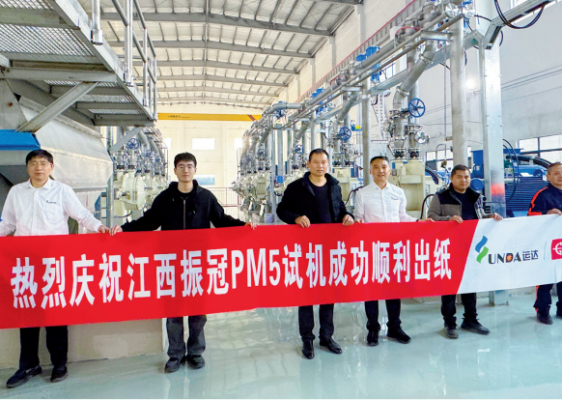 A Great Start! Yunda’s Complete Stock Preparation System Supports Successful First Paper Production on Jiangxi Zhenguan PM5
-
 Yunda Successfully Starts Up Complete Stock Preparation and Approach Flow Systems for Jiangmen Renke Oasis 80,000 TPA Tissue Paper Project
-
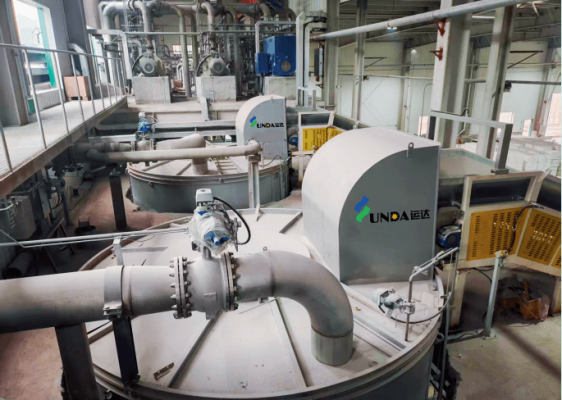 Successful Start-Up of Taisheng Group’s Tissue Paper Project in Guizhou
-
 Taisheng Group’s Tissue Paper Project in Jiangxi Successfully Starts Production
-
 Sun Paper 300,000 TPA Tissue Project (Phase II) – Complete Pulping System Successfully Started Up