
A ragger, also known as a pulper ragger, rope ragger, or hydrapulper ragger, is used to continuously remove stringy and entangling contaminants from a hydrapulper during waste paper pulping.
Recovered paper rarely enters a paper mill completely clean. Depending on the raw material, bales may contain steel wire, plastic film, packing straps, string, textile fibers, cotton yarn and other materials that do not disintegrate like paper fiber. If these contaminants remain inside the pulper for too long, they can accumulate, circulate with the stock and increase the load on downstream cleaning and screening equipment.
The ragger provides a simple mechanical way to remove many of these contaminants while the pulper is still operating.
Inside the hydrapulper, long and flexible contaminants gradually become entangled with one another and form a continuous ragger rope. The ragger grips this rope and pulls it out of the pulper at a controlled speed. The extracted rope can then be cut into manageable sections by a rope cutter for transportation and disposal.
In a properly designed recovered-paper stock preparation line, this relatively simple piece of equipment plays an important role in keeping the pulping process stable.
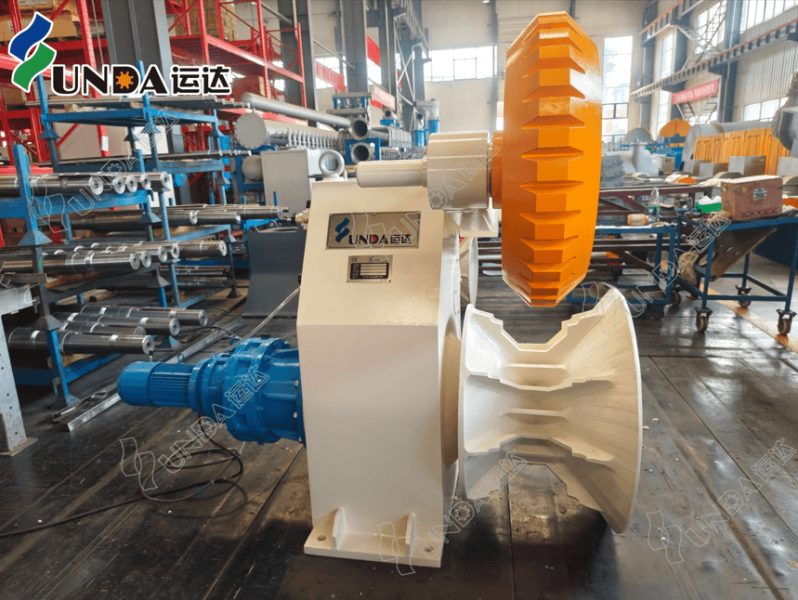
What Is a Pulper Ragger?
A pulper ragger is a coarse contaminant removal device installed together with a hydrapulper, particularly in waste paper and recycled fiber stock preparation systems.
Its main purpose is not to screen pulp through openings or separate contaminants by density. Instead, it deals primarily with contaminants that can twist, wind and form a rope inside the pulper.
Typical materials include:
- baling wire
- strings and ropes
- plastic film
- plastic strips
- packing straps
- yarn
- cotton or textile fibers
- other long, flexible contaminants
The operating principle described in our ragger design is straightforward: contaminants in the waste paper continuously rotate and become entangled during hydrapulper operation. As the mass develops into a rope, the ragger slowly and continuously pulls it out, providing an initial stage of contaminant removal before the stock moves further into the preparation system.
This is particularly useful in recovered-paper mills, where the contamination level of incoming furnish can vary considerably from bale to bale.
Why Is a Ragger Needed in Waste Paper Pulping?
A hydrapulper has one primary job: disintegrating recovered paper and separating usable fibers so that they can continue through stock preparation.
The difficulty is that not everything entering the pulper is paper.
Old corrugated containers and mixed recovered paper may contain plastics, wires, adhesives, textiles and other foreign materials. Modern recycled-fiber systems therefore try to remove coarse contaminants as early as practical instead of unnecessarily reducing their size and sending them deeper into the process. Major stock-preparation suppliers follow the same general principle of early coarse-contaminant removal in recovered-paper pulping systems.
A ragger deals with one particular group especially well: long, flexible and entangling materials.
Without controlled removal, these materials may remain in the pulper, build up around other contaminants, interfere with circulation or eventually have to be removed during a shutdown.
Continuous extraction changes the situation. Instead of waiting for a large mass of contaminants to accumulate, the ragger gradually draws the rope out while pulping continues.
This is why the machine should be considered part of the pulping process rather than simply an accessory mounted beside the pulper.
How Does a Ragger Machine Work?
The working principle of a ragger depends on the natural movement of stock inside the hydrapulper.
During pulping, the rotor generates strong circulation. Paper breaks down into fibers and smaller paper fragments, while many flexible contaminants remain comparatively intact.
Wire, plastic film, string, textile material and similar impurities begin to twist together.
Once a starting rope has been established, the contaminants continue attaching to it. The result is a long mixed-material rope extending from the pulper.
The ragger then performs four basic functions:
1. Grip the ragger rope
A loading or pressure roller keeps sufficient contact with the rope so that it can be withdrawn steadily.
2. Pull the rope at controlled speed
The motor and reducer drive the pulling mechanism at a relatively slow speed. Rope withdrawal must be controlled rather than aggressive.
3. Maintain suitable pressure
The pressing mechanism helps keep the rope engaged with the pulling wheel. In the supplied design, pneumatic pressure is used and can be adjusted according to operating requirements.
4. Continuously discharge contaminants
As new contaminants wind onto the rope inside the pulper, the formed rope is continuously pulled outward.
The extraction speed is important.
If the rope is pulled too quickly, it may not have enough time to collect contaminants effectively and may carry unnecessary fiber out of the pulper. If it moves too slowly under a high contaminant load, the rope can become excessively large or difficult to handle.
For this reason, the ragger speed should normally be matched to the furnish quality, pulper operation and actual contaminant loading rather than treated as a fixed setting.
Main Structure of the Ragger
Although ragger designs vary between manufacturers and mill requirements, the machine does not need to be mechanically complicated.
The supplied design mainly consists of a drive system, guide wheel, loading or pressure device, and pressure roller assembly. The motor and reducer provide slow pulling movement, while the pressure mechanism keeps the rope properly engaged.
This relatively simple arrangement offers an important practical advantage in a paper mill: the equipment is accessible and does not require a complex internal mechanism to perform its basic function.
The focus should instead be on stable pulling force, controllable speed, reliable pneumatic loading and a structure strong enough to handle a wet, irregular and sometimes surprisingly heavy contaminant rope.
Typical Ragger Technical Parameters
Different pulper sizes, furnish qualities and production capacities require different ragger configurations.
The technical information supplied for our equipment includes the following reference configurations:
| Parameter | JSJ45 | JSJ600 |
|---|---|---|
| Rope Stranding / Pulling Speed | 0–30 m/h | 0–60 m/h |
| Motor Power | 2.2 kW | 4 kW |
| Reducer Motor | BLED53-841-YEJ2.2 | FA107-199.31-4p-4kW |
| Compressed Air Pressure | 0.5 MPa* | According to configuration |
| Dimensions (L × W × H) | 2000 × 2300 × 1500 mm | 1900 × 1700 × 1700 mm |
*The supplied JSJ45 documentation lists 0.5 MPa compressed-air pressure. Equipment parameters can be selected or adjusted according to the pulping system and project requirements.
When purchasing a ragger, motor power alone should not be used to compare machines.
The more important question is whether the pulling speed, pressure system, installation arrangement and control logic match the hydrapulper and the contamination characteristics of the mill's raw material.
Ragger in a Continuous Pulping System
A ragger is most effective when it is considered together with the entire pulper reject-handling system.
A typical continuous waste paper pulping line may include:
D-Type Pulper → Detrasher → Drum Screen → Ragger → Rope Cutter → Trash Well / Grapple
Depending on the plant design, the exact arrangement may differ, but each machine deals with a different part of the reject problem.
The D-type hydrapulper disintegrates the recovered paper and produces the fiber suspension.
The ragger continuously removes long, stringy and entangling contaminants.
The detrasher handles another portion of coarse pulper rejects.
The drum screen helps separate recoverable fiber from coarse reject material.
The rope cutter cuts the long ragger rope into shorter sections that are easier to transport or dispose of.
The trash well and grapple are used for handling heavy or accumulated rejects according to the system arrangement.
The documentation supplied for the ragger specifically lists D-Type Pulper, Detrasher, Drum Screen, Ragger, Rope Cutter, Trash Well and Grapple as components that can form a continuous pulping system, with the overall process controlled through a DCS automation system.
This system approach matters.
No single machine can remove every contaminant present in recovered paper. A ragger is highly useful for rope-forming materials, but it should not be expected to replace cleaners, pressure screens, coarse screens or heavy-reject equipment.
What Contaminants Can a Ragger Remove?
A ragger works best with materials that are long enough or flexible enough to become entangled.
Steel and Baling Wire
Recovered paper bales are often held together with wire.
Some wire is removed before the pulper, but remaining pieces can enter the system with the furnish. Long wire sections can become part of the ragger rope and leave the pulper together with other contaminants.
Plastic Film
Plastic wrapping and film are common contaminants in recovered paper.
When the film remains in relatively large pieces, it can twist around the developing ragger rope and be drawn out of the pulper.
String and Packing Material
Rope, string and certain types of packaging straps naturally become entangled in the pulper, making them particularly suitable for removal by a ragger.
Textile and Yarn Contaminants
Cotton yarn and other textile-like materials can also become incorporated into the contaminant rope.
Mixed Pulper Rejects
In actual operation, a ragger rope is rarely made from only one type of material.
A typical rope may contain wire, plastic, fabric, string and small quantities of trapped fiber. The appearance and density of the rope can therefore change significantly when the recovered-paper furnish changes.
This is one reason why adjustable pulling speed is useful.
Ragger vs. Detrasher: What Is the Difference?
These two machines are sometimes confused because both operate around the hydrapulper and both remove coarse contaminants.
They do not perform the same job.
A ragger removes contaminants by allowing long materials to become entangled into a rope and then continuously pulling that rope from the hydrapulper.
A detrasher, by contrast, removes a broader reject stream from the pulper and normally incorporates separation or screening so that useful fiber can be recovered while contaminants are discharged.
The two machines are therefore complementary rather than interchangeable.
In a continuous recovered-paper pulping system, using both allows different types of rejects to be removed according to their physical characteristics.
Ragger vs. Rope Cutter
The ragger and rope cutter are also two separate machines.
The ragger forms and pulls out the contaminant rope.
The rope cutter is installed downstream to cut the extracted rope into shorter sections.
Without cutting, a continuous ragger rope can become difficult to collect, move and transport. This is particularly noticeable when the rope contains a substantial amount of steel wire or heavy plastic material.
For an automated or semi-automated continuous pulping line, combining the ragger with a rope cutter is therefore a practical arrangement.
Key Advantages of a Properly Selected Pulper Ragger
Continuous Contaminant Removal
The main advantage is simple: contaminants can be removed while the pulper continues operating.
This helps prevent long flexible materials from remaining indefinitely inside the pulper.
Simple Mechanical Structure
Compared with many screening and cleaning machines, a ragger has relatively few functional assemblies.
A straightforward mechanical design generally makes inspection and routine maintenance easier.
Low Installed Power
Because the machine pulls the rope slowly rather than performing the pulping itself, its installed motor power can be relatively low. The reference models in the supplied documentation use 2.2 kW and 4 kW motors.
Adjustable Operating Speed
The required extraction rate changes with furnish quality.
A mill processing relatively clean recovered paper does not necessarily need the same rope pulling rate as a line processing heavily contaminated OCC or mixed recovered paper.
Adjustable speed makes it possible to adapt the machine to actual operating conditions.
Suitable for Automated Pulping Lines
The ragger can be integrated into the control philosophy of a continuous pulping system rather than operated as an isolated device.
Motor status, pressure conditions, operating sequence and associated rope-cutting equipment can be incorporated into the mill's control system according to the project design.
Where Is a Ragger Commonly Used?
Pulper raggers are mainly associated with recycled fiber and waste paper stock preparation, especially where the incoming furnish contains significant amounts of stringy contaminants.
Typical applications include:
- OCC stock preparation lines
- recycled containerboard mills
- testliner production
- fluting paper production
- mixed waste paper pulping
- recycled packaging paper mills
- board mills using recovered fiber
- continuous hydrapulper systems
The actual need for a ragger depends less on the final paper grade than on the furnish and pulping arrangement.
A mill receiving well-sorted material may have a much lower ragger load than a plant processing highly contaminated post-consumer recovered paper.
How to Select a Ragger for a Hydrapulper
A ragger should be selected as part of the pulping system, not from a catalogue specification alone.
Before confirming a model, several operating conditions should be reviewed.
Hydrapulper Type and Size
The ragger must match the pulper arrangement, including the rope outlet position, installation height and available surrounding space.
Pulping Capacity
Higher stock throughput generally means a larger quantity of recovered paper entering the pulper, but contaminant generation does not always increase proportionally.
Production capacity is therefore important, but it should be evaluated together with furnish quality.
Raw Material
This is one of the most important selection factors.
OCC, mixed waste paper, commercial recovered paper and mill broke can have very different contaminant profiles.
For a new project, we normally recommend that customers provide details of their raw material rather than only stating the required paper production capacity.
Contaminant Content
How much wire, film, textile material and packing material enters the pulper?
A heavily contaminated furnish may require a higher available pulling speed and a more robust reject-handling arrangement.
Rope Pulling Speed
The pulling speed should have sufficient adjustment range to accommodate changes in furnish.
The supplied configurations provide reference speed ranges of 0–30 m/h and 0–60 m/h, depending on model.
Rope Cutter Arrangement
For continuous operation, the extracted rope must eventually be handled.
The rope cutter location, cutting method and discharge arrangement should therefore be considered during layout design rather than added as an afterthought.
Automation Requirements
For a modern stock-preparation system, motor control, pneumatic loading, alarms, interlocks and rope-cutter operation can be integrated with the overall DCS or PLC control philosophy.
Operating Considerations
A ragger is mechanically simple, but good operation still makes a noticeable difference.
The first point is the rope formation itself.
At startup, the operator needs to establish a suitable initial rope so that contaminants inside the pulper have something around which they can wind. Once a stable rope is formed, continuous extraction becomes much easier.
The second point is pulling speed.
There is no universal best speed. Operators should observe the rope coming from the pulper. Its diameter, composition, wetness and fiber content provide useful information about what is happening inside.
The third point is pressure on the pulling mechanism.
Too little pressure may result in slipping. Excessive pressure is unnecessary and may increase mechanical loading. Pneumatic pressure should therefore be adjusted to maintain reliable traction without overloading the mechanism.
The fourth point is the rope cutter and discharge area.
A ragger can operate correctly and still create a handling problem if the extracted rope is allowed to accumulate around the machine.
The entire route from the pulper outlet to the cutter and reject collection point should remain clear.
Ragger Maintenance
Routine maintenance mainly focuses on the drive, rollers, bearings, pneumatic components and areas that contact the contaminant rope.
Recommended checks include:
- inspect the pulling and pressure rollers for wear;
- check bearings and lubrication points;
- inspect the reducer and drive connection;
- verify pneumatic pressure and cylinder operation;
- check whether the rope is slipping during operation;
- remove wire or plastic wrapped around rotating components;
- inspect guards and safety devices;
- keep the rope discharge area clear;
- inspect the rope cutter regularly when it is installed as part of the system.
Maintenance frequency should be based on actual mill conditions.
A ragger processing heavily contaminated OCC may require more frequent inspection than the same machine operating with relatively clean recovered paper.
Why Ragger Performance Depends on the Entire Pulping System
It is tempting to evaluate a ragger by asking only how fast it pulls the rope.
In practice, that tells only part of the story.
Ragger performance is influenced by the hydrapulper flow pattern, furnish contamination, pulping consistency, rope formation, extraction speed, pressure setting and the way other pulper rejects are removed.
A poorly adjusted ragger cannot compensate for an incorrectly designed pulping system.
Likewise, a correctly selected machine operating together with an appropriate pulper, detrasher, drum screen and reject-handling system can make coarse contaminant removal much more predictable.
That is why we recommend evaluating the ragger together with the complete stock preparation process whenever possible.
Frequently Asked Questions About Ragger Machines
What is a ragger in a paper mill?
A ragger is a coarse contaminant removal machine installed with a hydrapulper. It continuously pulls out a rope formed from entangled contaminants such as wire, string, plastic film, packing material and textile fibers.
Is a ragger the same as a rope ragger?
Yes. In the pulp and paper industry, ragger, rope ragger, pulper ragger and hydrapulper ragger are commonly used to describe this type of equipment.
What is a ragger rope?
A ragger rope is the long strand of contaminants formed inside the hydrapulper. It normally contains a mixture of wire, plastic, string, textile material and other entangled rejects.
Does the ragger remove all contaminants from waste paper pulp?
No.
The ragger is mainly intended for long and entangling contaminants. Sand, glass, stones, small metal particles, stickies and fine contaminants require other cleaning and screening equipment.
A complete recovered-paper stock preparation system normally combines several separation methods.
Can a ragger work continuously?
Yes. Continuous contaminant removal is one of the main purposes of the machine.
The ragger can continuously pull the developing contaminant rope from the hydrapulper while the pulping system is operating.
Why is ragger speed adjustable?
The quantity and type of contaminants change with the recovered-paper furnish.
Adjustable speed allows the rope extraction rate to be matched to actual pulper conditions instead of operating at one fixed speed.
What happens to the rope after it leaves the ragger?
The rope is normally sent to a rope cutter, which cuts it into shorter sections for easier collection, transportation and disposal.
What information is required to select a ragger?
For proper selection, it is useful to provide:
- recovered-paper type;
- hydrapulper model or volume;
- pulping capacity;
- production capacity;
- approximate contaminant level;
- existing pulper layout;
- required automation level;
- available installation space;
- whether a rope cutter is already installed.
For a new stock preparation project, a process flow diagram and basic furnish information are especially helpful.
Ragger for Your Waste Paper Stock Preparation Line
The ragger is not the largest or most complicated machine in a recycled-fiber preparation system, but it solves a very specific problem that paper mills encounter every day.
By continuously pulling wire, string, plastic film, yarn and other entangling materials from the hydrapulper, the machine helps keep these coarse contaminants under control before the pulp enters subsequent cleaning and screening stages.
For complete waste paper pulping projects, the ragger can be supplied and engineered together with the D-type hydrapulper, detrasher, drum screen, rope cutter, trash well, grapple and related stock preparation equipment.
If you are selecting a ragger for an existing hydrapulper or designing a new waste paper stock preparation line, send us your raw material, production capacity, hydrapulper specifications and process requirements. We can recommend a suitable ragger configuration and integrate it into the complete pulping system.
Case
-
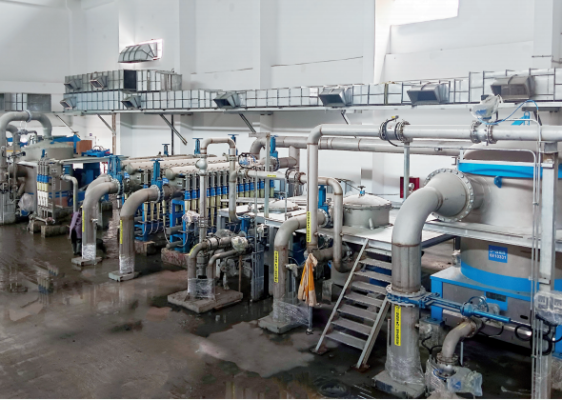 Yunda’s Complete Stock Preparation System for Jinlong’s 6600 mm Packaging Paper Project Enters Commissioning Stage
-
 Yunda Secures Orders for Premium Tissue Paper Projects at Two Yusen Group Production Bases
-
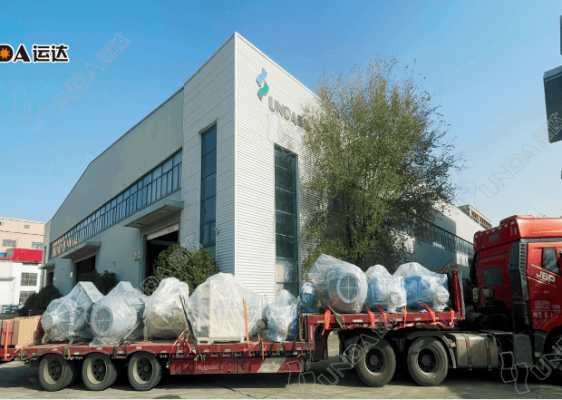 Yunda Successfully Ships the Complete Stock Preparation System for Hengan Group’s Tissue Paper Project
-
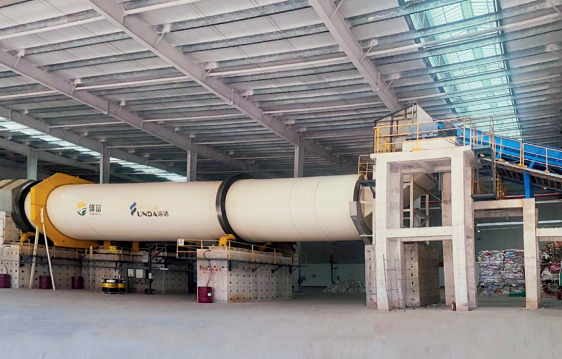 Yunda’s Complete Stock Preparation Systems for Guangxi Xiongfu Paper’s 300,000 t/a Grayboard Paper Project Successfully Start Up
-
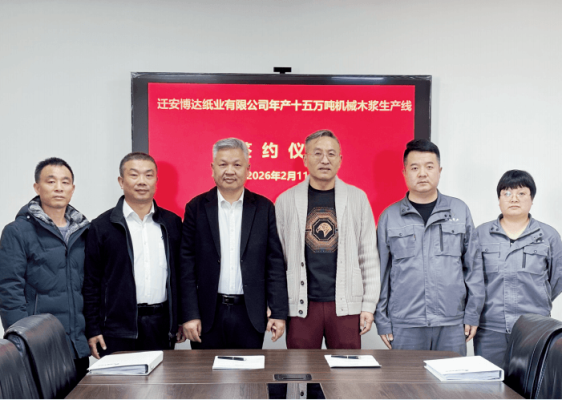 Yunda Wins the Full-Line Pulping Equipment Order for Qian’an Boda’s 150,000-Ton Bleached Chemi-Thermomechanical Pulp (BCTMP) Project
-
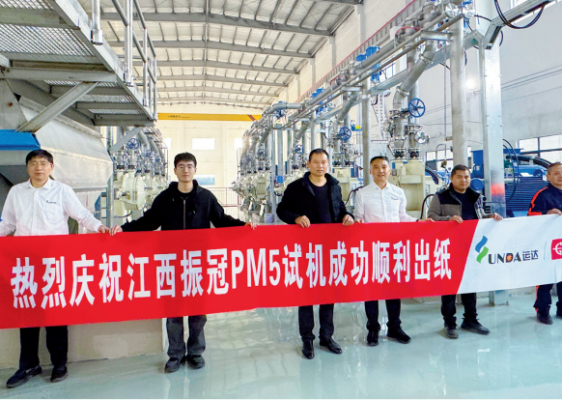 A Great Start! Yunda’s Complete Stock Preparation System Supports Successful First Paper Production on Jiangxi Zhenguan PM5
-
 Yunda Successfully Starts Up Complete Stock Preparation and Approach Flow Systems for Jiangmen Renke Oasis 80,000 TPA Tissue Paper Project
-
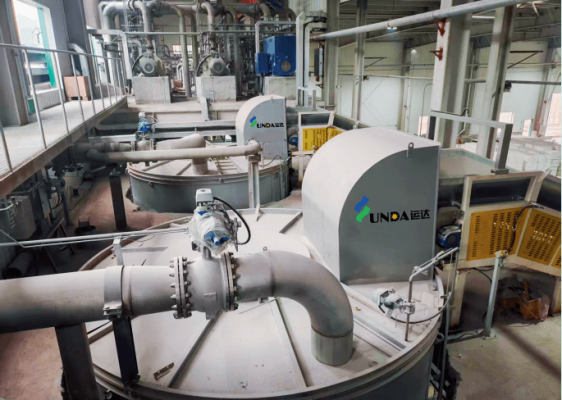 Successful Start-Up of Taisheng Group’s Tissue Paper Project in Guizhou
-
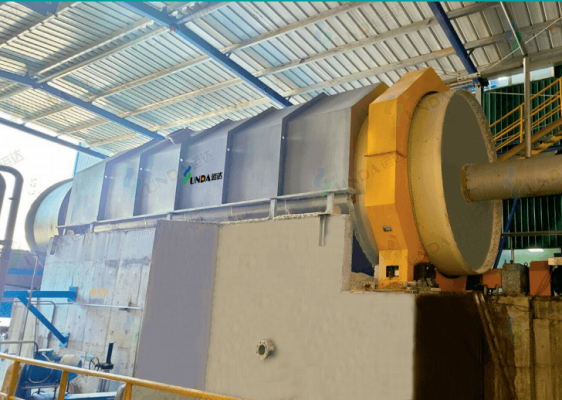 Taisheng Group’s Tissue Paper Project in Jiangxi Successfully Starts Production
-
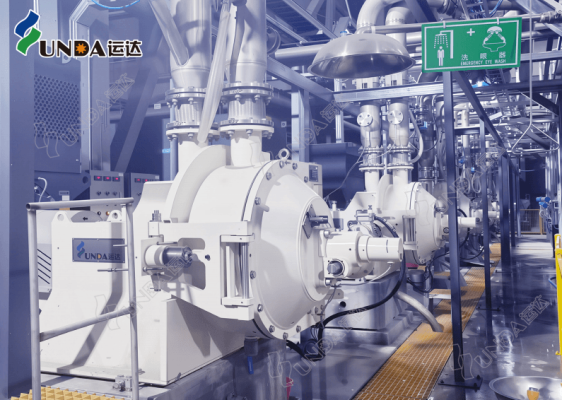 Sun Paper 300,000 TPA Tissue Project (Phase II) – Complete Pulping System Successfully Started Up