
What Are Centri-Cleaners for Low Consistency Pulp?
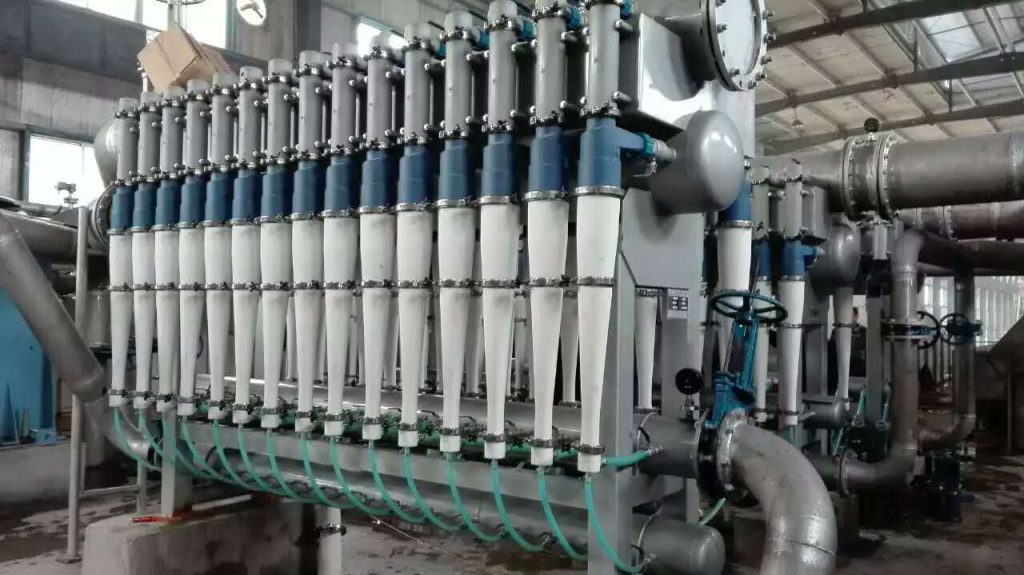
Centri-Cleaners for Low Consistency Pulp, also known as LC Cleaners (Low Consistency Cleaners), are one of the most important cleaning systems used in modern pulp and paper mills.
Based on the hydrocyclone separation principle, LC cleaners operate at a pulp consistency typically ranging from 0.4% to 1.2%. By utilizing centrifugal force, the system efficiently separates contaminants from valuable fibers, producing cleaner pulp while minimizing fiber loss.
These contaminants may include:
- Sand and grit
- Small stones and dust particles
- Ink particles
- Hot melt adhesives
- Plastic particles
- Foam
- Sticky contaminants
- Debris and lightweight impurities
- Fiber bundles
By removing these contaminants, paper mills can significantly improve pulp cleanliness, enhance final paper quality, reduce equipment wear, and optimize production efficiency.
How Does a Low Consistency Centri-Cleaner Work?
The operating principle of a low consistency cleaner is based on centrifugal separation.
The pulp slurry enters the cleaner tangentially under a certain pressure, typically at a consistency of 0.4% to 1.2%.
Inside the conical body, the pulp rotates downward at high speed, creating a powerful vortex.
Heavy contaminants, such as sand, stones, metal particles and dense debris, are forced toward the outer wall of the cone due to centrifugal force. These contaminants move downward and are continuously discharged through the reject outlet at the bottom.
At the same time, the cleaned accept pulp moves toward the inner vortex and rises upward before being discharged from the top outlet into the accept pipeline.
A unique dilution and backwashing water system installed at the bottom helps recover usable fibers carried by the reject stream. This significantly reduces fiber loss while maintaining high cleaning efficiency.
The entire process operates continuously and efficiently, ensuring stable pulp quality throughout the production line.
What Contaminants Can LC Cleaners Remove?
A properly designed LC cleaning system can efficiently remove a wide range of contaminants, including:
Heavy Contaminants
- Sand
- Grit
- Small stones
- Metal particles
- Glass fragments
Lightweight Contaminants
- Foam
- Plastic particles
- Hot melt adhesives
- Sticky contaminants
Fine Impurities
- Ink particles
- Dust
- Small debris
- Fiber bundles
The cleaner system can be customized according to different pulp sources, including OCC, mixed waste paper, deinked pulp, virgin pulp, and tissue production lines.
Key Advantages of Yunda Low Consistency Centri-Cleaners
1. High Cleaning Efficiency
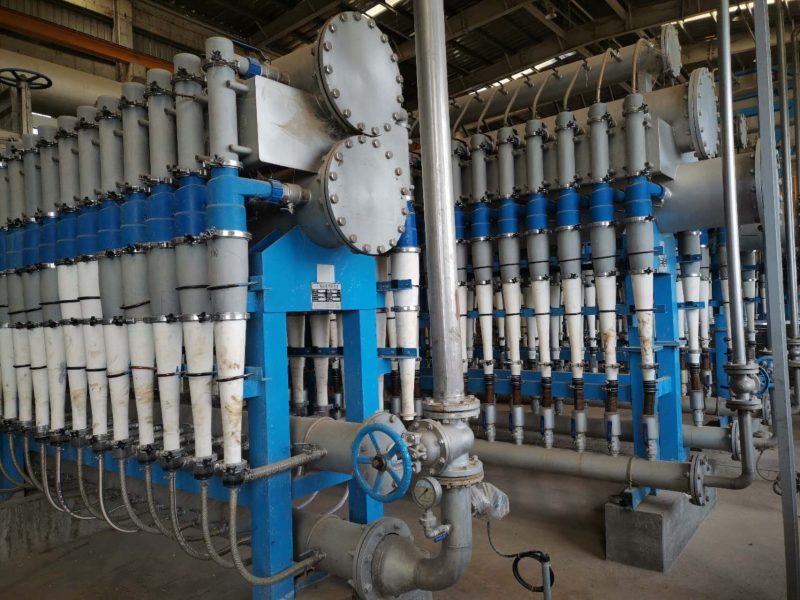
The optimized internal flow structure and extended cone design significantly improve contaminant removal performance.
The system effectively removes both heavy and lightweight impurities while maintaining stable pulp quality.
2. Reduced Fiber Loss
The bottom backwashing water design recovers valuable fibers from the reject stream.
This design minimizes fiber loss and improves raw material utilization.
3. Superior Wear Resistance and Long Service Life
The lower cone section adopts a ceramic-lined structure that offers excellent abrasion resistance.
Compared with conventional materials, ceramic components significantly extend equipment service life and reduce maintenance costs.
4. Flexible Multi-Stage Cleaning Configuration
Modern paper mills often utilize multi-stage LC cleaning systems.
Different cleaning stages can be combined according to process requirements to maximize cleaning efficiency while minimizing fiber losses.
This flexible design can be applied in:
- OCC pulping systems
- Tissue paper production lines
- Packaging paper production
- Deinking systems
- Fine paper production lines
Typical Applications in Paper Mills
Low consistency centri-cleaners are widely used in various process sections, including:
- Primary LC cleaning systems
- Last stage LC cleaning systems
- Recycled fiber processing lines
- Tissue paper stock preparation systems
- Packaging paper stock preparation systems
- Deinking pulp systems
Proper cleaner configuration helps improve the overall performance of the stock preparation process.
Technical Specifications
| Model | System Position | Capacity | Inlet Consistency | Inlet Pressure |
|---|---|---|---|---|
| SC400 | Last Stage LC Cleaning | 400 L/min per unit | <1.2% | 0.2-0.3 MPa |
| SC450 | LC Cleaning | 450 L/min per unit | <2.0% | 0.25-0.35 MPa |
| SC600 | Last Stage LC Cleaning | 600 L/min per unit | <1.2% | 0.2-0.3 MPa |
| SC1000 | Last Stage LC Cleaning | 1000 L/min per unit | <1.5% | 0.2-0.3 MPa |
Additional parameters:
- Pressure difference: 0.13-0.15 MPa
- Reject discharge mode: Closed and continuous operation
Why Are Multi-Stage LC Cleaning Systems Becoming More Important?
As paper mills demand higher paper quality and lower production costs, multi-stage cleaning systems have become increasingly important.
Compared with single-stage cleaning, multi-stage systems offer:
- Higher contaminant removal efficiency
- Lower fiber loss
- Better pulp cleanliness
- Improved final paper quality
- Reduced energy consumption
- Greater operational stability
By selecting the appropriate cleaner configuration, paper mills can achieve both quality improvement and cost optimization.
Choose the Right Centri-Cleaners for Your Pulping System
Selecting the proper Centri-Cleaners for Low Consistency Pulp depends on several factors:
- Pulp type
- Production capacity
- Contaminant characteristics
- Required paper quality
- Existing process layout
An optimized LC cleaning system not only removes contaminants efficiently but also protects downstream equipment, reduces fiber loss, and enhances overall mill performance.
As one of the key components in modern stock preparation systems, high-performance LC cleaners continue to play a vital role in improving paper production efficiency and product quality.
Case
-
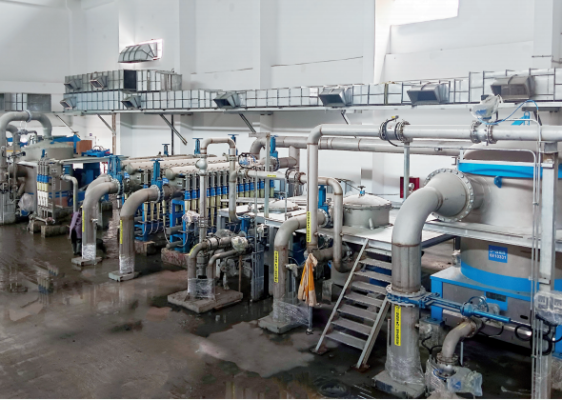 Yunda’s Complete Stock Preparation System for Jinlong’s 6600 mm Packaging Paper Project Enters Commissioning Stage
-
 Yunda Secures Orders for Premium Tissue Paper Projects at Two Yusen Group Production Bases
-
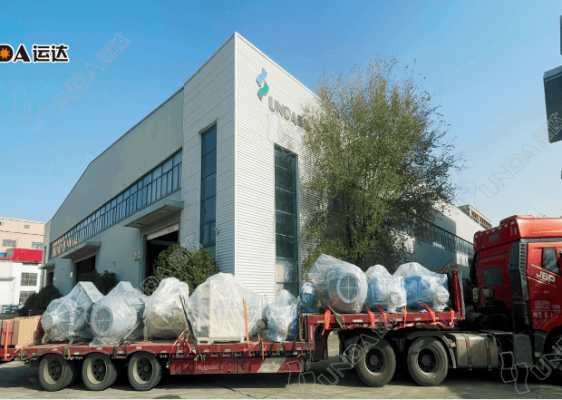 Yunda Successfully Ships the Complete Stock Preparation System for Hengan Group’s Tissue Paper Project
-
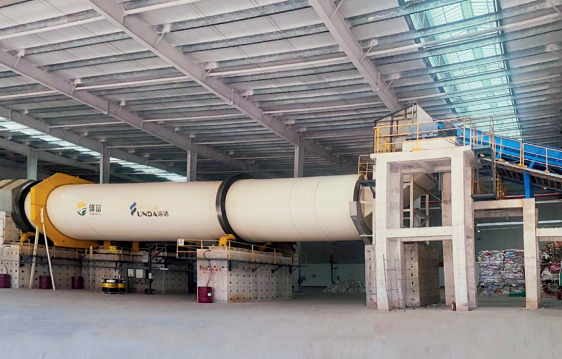 Yunda’s Complete Stock Preparation Systems for Guangxi Xiongfu Paper’s 300,000 t/a Grayboard Paper Project Successfully Start Up
-
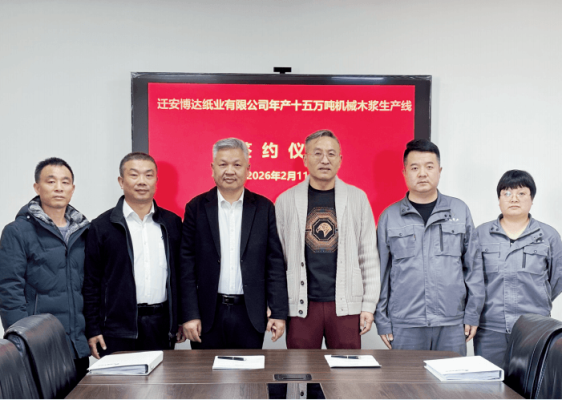 Yunda Wins the Full-Line Pulping Equipment Order for Qian’an Boda’s 150,000-Ton Bleached Chemi-Thermomechanical Pulp (BCTMP) Project
-
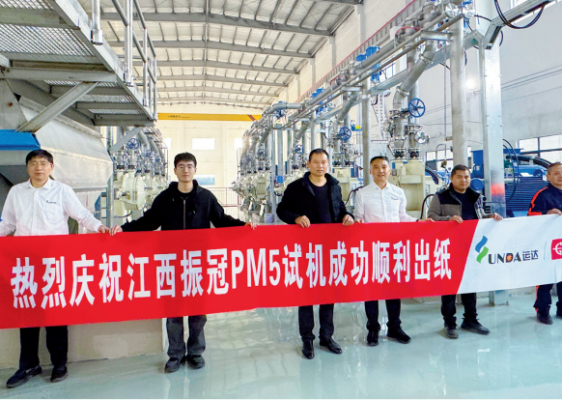 A Great Start! Yunda’s Complete Stock Preparation System Supports Successful First Paper Production on Jiangxi Zhenguan PM5
-
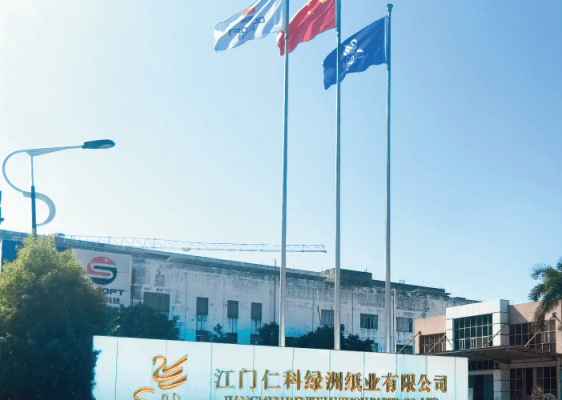 Yunda Successfully Starts Up Complete Stock Preparation and Approach Flow Systems for Jiangmen Renke Oasis 80,000 TPA Tissue Paper Project
-
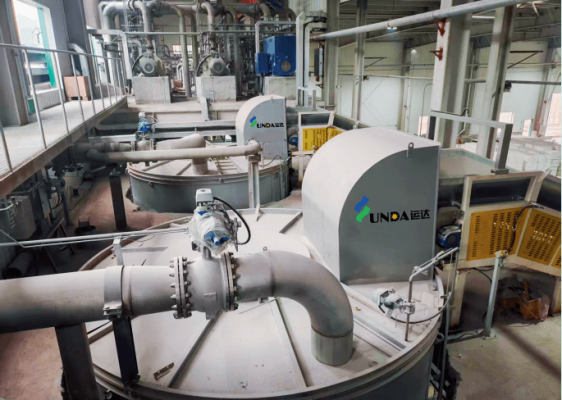 Successful Start-Up of Taisheng Group’s Tissue Paper Project in Guizhou
-
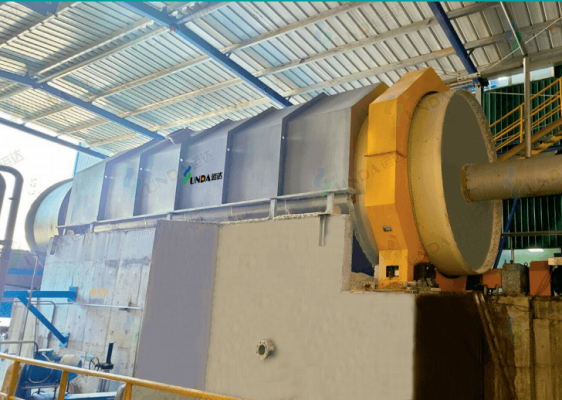 Taisheng Group’s Tissue Paper Project in Jiangxi Successfully Starts Production
-
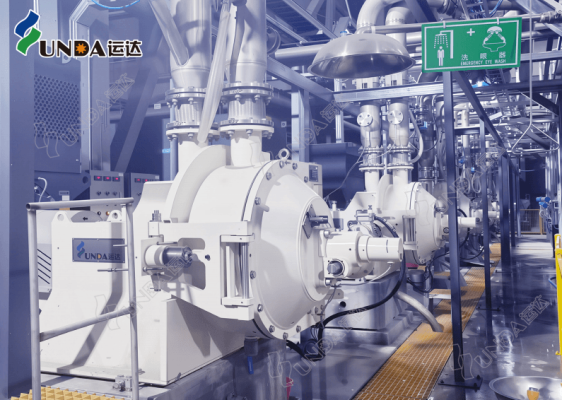 Sun Paper 300,000 TPA Tissue Project (Phase II) – Complete Pulping System Successfully Started Up